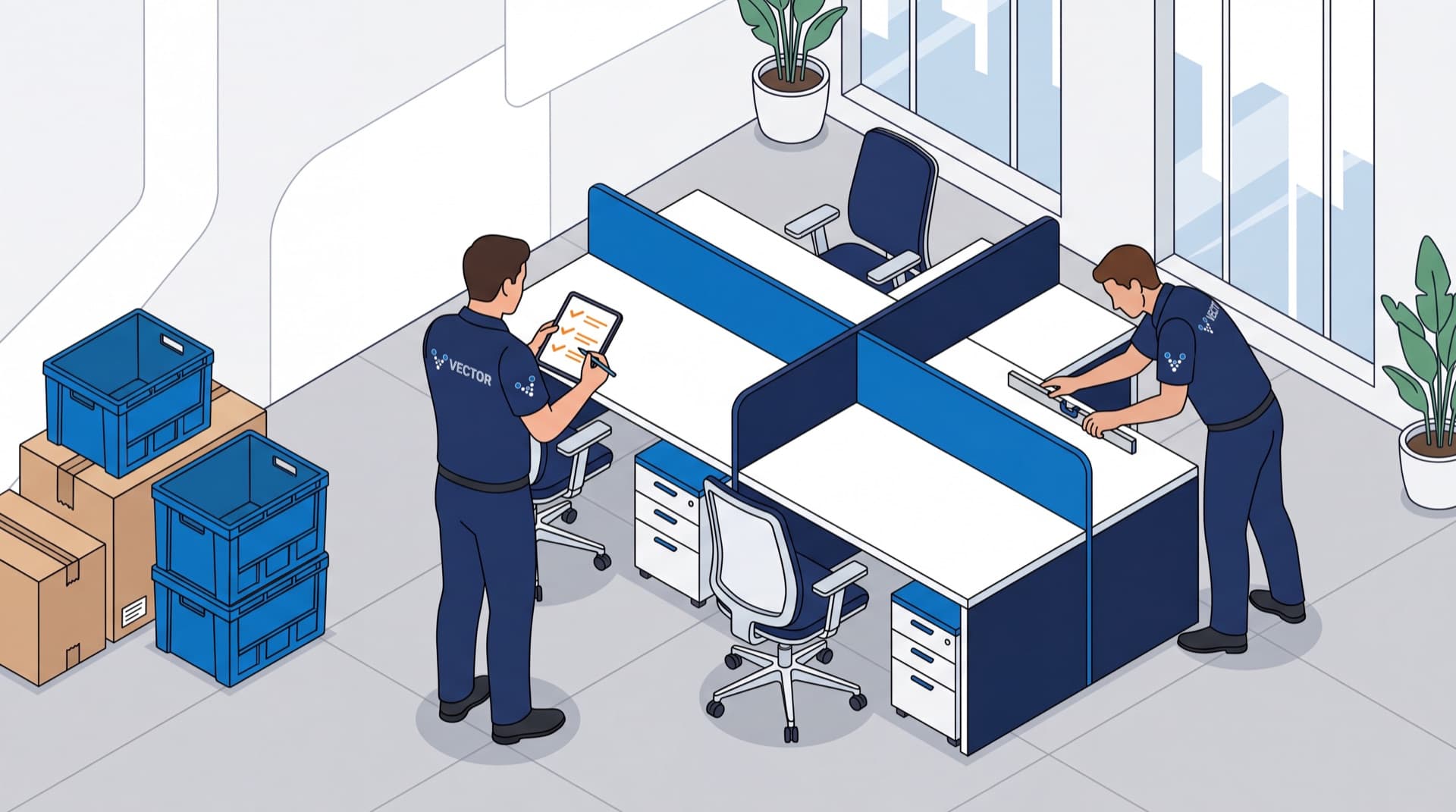
Post installation furniture support is the closeout process that happens after desks, workstations, private offices, conference rooms, casegoods, and modular systems are assembled. For a facility manager or project lead, this stage is where the installation is checked, adjusted, documented, and handed over before the space is considered complete.
This article explains what should happen after an office furniture installation, what questions to ask before hiring an installation team, and where the limits are between furniture installation work and separate trades such as electrical, data, structured cabling, engineering, or building modifications.
Quick Answer
Post installation furniture support usually includes a final walkthrough, an office furniture installation punch list, workstation adjustments, documentation review, cleanup, and project handover. The exact support included depends on the agreed scope, manufacturer requirements, site conditions, and contract. Businesses should confirm what is included before install day so follow-up work, change requests, and trade coordination are handled clearly.
What Post Installation Furniture Support Means
Post installation furniture support is not just a quick look around the space. It is the practical closeout work that confirms the installed furniture matches the plan, functions correctly, and is ready for employees or tenants to use.
Depending on the project scope, this may include:
- Walking the space with the client, dealer, project manager, or facility team.
- Creating and resolving a furniture punch list.
- Checking workstation alignment, panel connections, drawers, doors, surfaces, and hardware.
- Identifying missing, damaged, or incorrect components.
- Confirming which items require manufacturer replacement, dealer review, or a separate service visit.
- Removing packaging and leaving the work area broom-clean when that cleanup is included in scope.
- Providing closeout notes, photos, product information, or handover documentation when required by the project.
For context on the broader installation process, Vector's office furniture installation service covers the planning, assembly, placement, and coordination work that happens before this closeout stage.
Why Installation Is Not Finished When the Furniture Is Assembled
A workstation can be assembled and still need closeout attention. Panels may need alignment. A surface may sit slightly out of level. A drawer may need adjustment. A missing connector may not be visible until the final run of stations is reviewed.
The goal of post-installation support is to catch those details before the client treats the space as finished. That matters because small installation issues can become larger operational problems once employees move in, boxes arrive, IT equipment is placed, and departments begin using the space.
This is also where expectations need to be clear. A professional closeout process does not mean every future change is automatically included at no additional cost. Follow-up work depends on the contract, the original installation scope, manufacturer requirements, access conditions, and whether the request is a correction, a change, or a new phase of work.
Final Walkthrough and Punch-List Creation
The final walkthrough is the structured review of the installed furniture before sign-off. It gives the client and installation team a shared view of what is complete, what needs adjustment, and what may require outside action.
An office furniture installation punch list may include:
- Workstations that need leveling, tightening, or realignment.
- Missing trim, caps, brackets, keys, hardware, or connectors.
- Damaged panels, surfaces, pedestals, or storage components.
- Incorrect product placement compared with the plan.
- Items that cannot be completed because parts, access, approvals, or trade work are missing.
A useful punch list should be specific. Instead of "fix desk area," it should identify the room, workstation, product type, observed issue, responsible party, and next action. Clear punch-list documentation helps prevent confusion between the client, dealer, manufacturer, installer, and project manager.
Workstation Leveling, Alignment, and Adjustment
Post-installation adjustments often focus on how the furniture sits and functions in the actual space. Floors are rarely perfect. Field conditions can differ from drawings. Existing walls, columns, outlets, baseboards, and HVAC access points can affect final placement.
Typical workstation adjustments may involve:
- Leveling work surfaces.
- Aligning panels and panel runs.
- Adjusting drawers, doors, locks, and pulls.
- Checking overhead storage and pedestal placement.
- Tightening connections after the full run is assembled.
- Confirming clearances for seating, walkways, doors, and shared equipment.
These details matter because employees judge an office installation by how the finished space feels in daily use. A clean layout on paper still needs field-level adjustment before handover.
Missing, Damaged, or Incorrect Components
Not every issue discovered after installation is caused by the installer. Some problems come from freight damage, incorrect product orders, discontinued parts, missing manufacturer components, or changes made after the furniture plan was approved.
A good closeout process separates these categories:
- Installation correction: Something installed within scope needs adjustment or correction.
- Product issue: A component is damaged, defective, missing, or incorrect.
- Scope gap: The work requires an item, trade, or service that was not included in the original scope.
- Change request: The client wants a different layout, product placement, or configuration after installation.
That distinction protects the project from confusion. It also helps the client understand whether the next step is installer follow-up, dealer support, manufacturer replacement, or a separate quote.
Furniture Reconfiguration and Employee Fit Adjustments
After employees test a new layout, some teams realize they need changes. A department may need more storage. A workstation may need to be mirrored. A private office may need a different credenza position. A manager may want better sight lines or more space around shared equipment.
Some small adjustments may be handled as part of the original closeout if they are included in the agreed scope. Other requests may become a furniture installation follow-up service or a separate reconfiguration project.
This is especially important for modular furniture. Moving panels, changing workstation sizes, or reusing existing components can affect power/data access, egress, ADA clearance, product compatibility, and the approved space plan. When the need is bigger than a punch-list correction, Vector's office reconfiguration service is the more relevant path.
Cable-Management and Technology Coordination Boundaries
Furniture installation often touches cable-management coordination, but it is not the same as electrical, data, structured cabling, or IT work. This distinction should be clear before the project starts.
Furniture installers may help route cables through furniture pathways when that work is included and the site conditions allow it. They may coordinate around monitor arms, work surfaces, modesty panels, raceways, or furniture power components. However, building electrical work, data drops, network infrastructure, fire/life-safety systems, engineering review, and structured cabling are separate scopes handled by qualified trades or specialized providers.
If the project includes technology coordination, confirm who owns each part:
- Who disconnects and reconnects employee equipment?
- Who handles data cabling and network connections?
- Who verifies power availability and code compliance?
- Who labels cables, ports, and workstation locations?
- Who resolves conflicts between furniture placement and building systems?
For projects where cabling is a defined need, review Vector's structured cabling service separately instead of assuming it is part of standard furniture installation.
Documentation, Warranties, and Product Information
Furniture installation handover should leave the client with enough information to manage the finished space. The required documentation depends on the project, dealer requirements, manufacturer requirements, and contract.
Closeout documentation may include:
- Final punch-list notes.
- Completion photos.
- Product information supplied by the dealer or manufacturer.
- Warranty or care information when provided by the manufacturer or dealer.
- Notes on missing, damaged, or backordered items.
- Site-specific observations that may affect future service.
- Sign-off records or acceptance forms when required.
The installer should not invent warranty coverage or make promises outside the manufacturer's or dealer's terms. If a warranty question comes up, the closeout process should document the issue and route it to the correct party.
Site Cleanup and Packaging Removal
Office furniture projects can produce a large amount of packaging: cardboard, foam, plastic wrap, pallets, corner guards, hardware bags, and labels. Site cleanup should be discussed before install day because buildings often have rules for loading docks, dumpsters, freight elevators, after-hours work, and recycling areas.
When cleanup and packaging removal are included, the closeout process should confirm that:
- Furniture areas are clear of installation debris.
- Packaging is removed or staged where the building requires it.
- Walkways and access points are left safe.
- Loose hardware or leftover components are identified instead of discarded.
- Recyclable or reusable materials are handled according to the site plan.
Cleanup is part of a professional handover, but it still needs defined expectations. Some buildings require special disposal procedures or restrict where materials can be staged.
Final Acceptance and Project Handover
Final acceptance is the point where the client, project manager, dealer, or facility team confirms the installation status. It does not always mean every external issue is solved. It means the project team has documented what is complete, what remains open, and who owns the next action.
A strong office furniture project closeout should clarify:
- Which areas are complete and ready for use.
- Which items remain on the punch list.
- Which items are waiting on parts, approvals, or manufacturer review.
- Which requests are outside the original scope.
- Who should be contacted for future service.
- Whether additional work requires a separate quote or authorization.
For larger projects, this closeout may connect with broader coordination handled through project management support.
Questions to Ask an Installation Company Before Hiring
Before choosing an installation provider, ask direct questions about closeout support. These questions help reveal whether the provider has a clear process or is only focused on assembly.
- What does your post installation furniture support process include?
- Do you perform a final walkthrough with the client, dealer, or project manager?
- How do you document an office furniture installation punch list?
- What types of post-installation adjustments are included in the original scope?
- What types of follow-up work require a separate quote?
- How are missing, damaged, or incorrect components documented?
- Who coordinates with the furniture dealer or manufacturer if parts are missing?
- What cleanup and packaging removal are included?
- What work is excluded, such as electrical, data, IT, cabling, engineering, or building-trade work?
- What information is provided at furniture installation handover?
The answers should be practical, specific, and tied to the scope of work. Vague promises can create problems later.
When Follow-Up Service May Require a Separate Scope or Quote
Some follow-up items are closeout corrections. Others are new work. The difference matters for budget, schedule, and responsibility.
Follow-up service may require a separate scope or quote when:
- The client changes the layout after installation.
- Employees request new workstation configurations.
- Additional furniture arrives after the original installation phase.
- Missing parts were not available during the scheduled install.
- Building conditions require extra labor or trade coordination.
- Electrical, data, cabling, or IT work is needed.
- The request involves furniture from a different manufacturer or system than originally scoped.
- The work happens after final acceptance and was not included in the contract.
Clear expectations protect both sides. The client gets a realistic path forward, and the installation team can price, schedule, and staff the work correctly.
Plan Your Post Installation Furniture Support With Vector
Post installation furniture support helps facility managers and project teams close out an office furniture installation with fewer loose ends. The best process includes a final walkthrough, punch-list documentation, workstation adjustments, cleanup expectations, and a clear handover that separates included support from new work.
If your business is planning an office furniture project, start with Vector's office furniture installation service. If you are comparing installation approaches, you may also find the article on professional office furniture installation useful before deciding how to scope the work.
Talk with Vector Installation Services about your installation scope, closeout expectations, and the support needed after install day.