Quick Answer
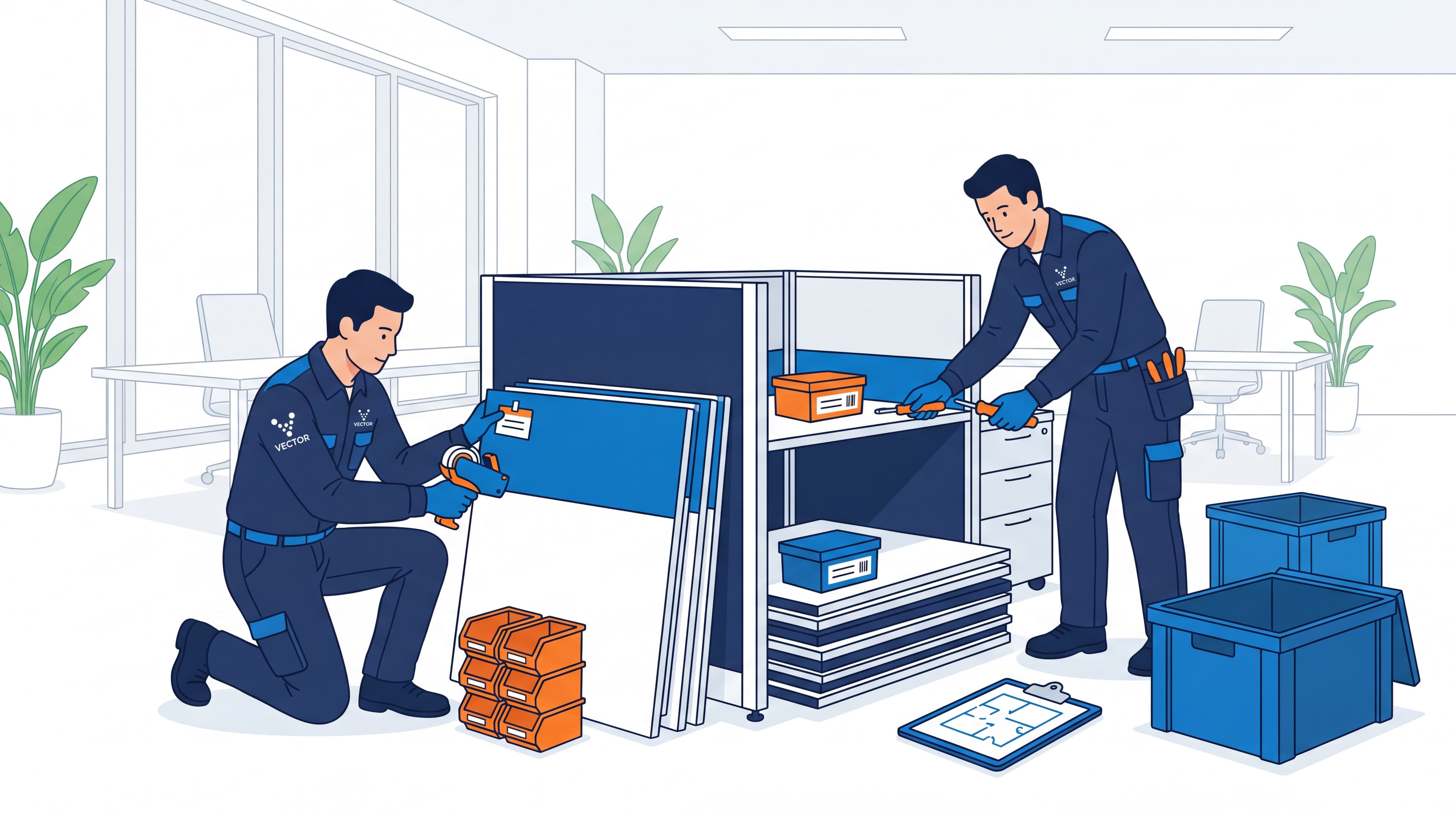
Cubicle disassembly is the process of safely taking apart modular office workstations so they can be moved, reconfigured, stored, recycled, or removed from a commercial space. A professional crew labels panels, work surfaces, electrical components, hardware, and connectors so the system can be rebuilt correctly or cleared without damage.
For businesses, the main goal is simple: avoid broken panels, missing hardware, unsafe electrical handling, and delays that interrupt the office move or lease return. Vector Installation Services helps Southern California companies with cubicle movers, cubicle installation, office reconfiguration, and office furniture removal.
What Cubicle Disassembly Includes
Cubicles are not just desks with walls. Most systems include panels, work surfaces, storage components, brackets, raceways, power components, trim pieces, and specialty connectors. If one part is damaged or mislabeled during teardown, the reinstall can slow down or fail.
A proper cubicle disassembly project usually includes:
- Reviewing the current layout and the future plan.
- Identifying the cubicle manufacturer and system type.
- Disconnecting power and data components safely when applicable.
- Removing overhead bins, shelves, tack boards, and accessories.
- Taking down panels, work surfaces, and support legs in the correct order.
- Labeling parts by workstation, department, or floor plan location.
- Sorting hardware into clearly marked containers.
- Protecting reusable panels and surfaces for transport or storage.
- Separating damaged or unwanted components for removal or disposal.
The process should be planned before crews arrive. If the cubicles will be reused, the teardown should match the new layout plan. If the cubicles are being removed permanently, the focus is on safe dismantling, clean removal, and lease-return requirements.
When Businesses Need Cubicle Disassembly
Most companies need cubicle disassembly during one of four situations.
1. Office Relocation
If your business is moving to a new office, cubicles must be taken apart before they can be transported. This is where many projects run into trouble. A general moving crew may be able to carry panels, but they may not understand how to disassemble, label, protect, and reinstall a modular furniture system.
For move projects, cubicle disassembly should be coordinated with the full office moving schedule so the furniture, IT, building access, and employee move plan stay aligned.
2. Office Reconfiguration
Companies often reconfigure cubicles when teams grow, departments shift, or the current layout no longer supports the way employees work. In this case, the goal is not just to remove cubicles. The goal is to reuse the system in a better layout.
That requires a crew that understands office reconfiguration, panel measurements, electrical raceways, worksurface support, and workstation sequencing.
3. Office Decommissioning
At the end of a lease, cubicles may need to be removed before the space is returned to the landlord. Depending on the lease, the tenant may also need to clear furniture, remove debris, patch damage, or coordinate other decommissioning work.
For these projects, cubicle disassembly should be part of the broader office decommissioning plan.
4. Furniture Removal or Disposal
If the cubicles are damaged, outdated, or no longer needed, they may need to be removed from the building. Even then, the teardown should be organized. Panels, metal components, laminate surfaces, and electrical parts may need different handling.
Vector supports office furniture removal for companies that need unwanted cubicles cleared from a commercial space.
Why Professional Cubicle Disassembly Matters
Poor cubicle teardown creates problems that usually show up later, when the schedule is already tight.
- Lost brackets, screws, connector plates, or trim pieces.
- Damaged panels from forcing parts apart in the wrong sequence.
- Scratched work surfaces from poor stacking or transport.
- Unlabeled parts that slow down the reinstall.
- Electrical raceways opened without the right coordination.
- Cubicles removed before the new layout is confirmed.
- Crews underestimating elevator, dock, or building access rules.
Professional disassembly reduces these risks because the crew is thinking beyond removal. They are protecting the next step, whether that is relocation, reinstallation, reconfiguration, storage, or disposal.
What to Prepare Before Cubicle Teardown Day
Before the disassembly crew arrives, prepare these items:
- Current floor plan or photos of the existing cubicle layout.
- New floor plan if the cubicles will be reused.
- Cubicle manufacturer information, if available.
- Building access rules, loading dock schedule, and elevator requirements.
- IT and electrical disconnect schedule.
- List of cubicles to keep, move, store, donate, recycle, or remove.
- Contact person who can approve decisions on site.
- Clear paths through hallways, exits, and freight areas.
If employees are still using the workstations, give them a clear deadline to remove personal items, files, equipment, and desk contents before teardown begins.
Should Cubicles Be Reused or Removed?
Not every cubicle system should be thrown away. Many modular systems can be reused if the panels, surfaces, storage, and hardware are in good condition. Reuse can reduce purchasing costs and keep usable furniture out of the landfill.
Ask these questions before deciding:
- Are the panels and work surfaces still in good condition?
- Does the system fit the new layout?
- Are replacement parts available?
- Does the furniture support current employee needs?
- Is reconfiguration cheaper than buying new furniture?
- Does the lease require full removal from the old space?
If the answer is unclear, have a commercial furniture team inspect the system before the move or decommissioning project starts.
Cubicle Disassembly Checklist
Use this checklist before starting a cubicle teardown project:
- Confirm whether the cubicles will be reused, moved, stored, or removed.
- Review the old layout and the new layout.
- Identify power and data components before teardown begins.
- Schedule IT disconnect and electrical support when needed.
- Label panels, work surfaces, connectors, and hardware.
- Protect reusable parts during stacking, loading, and transport.
- Keep hardware organized by workstation or furniture system.
- Confirm building access, elevator times, and loading dock rules.
- Separate reusable parts from damaged or disposal items.
- Schedule reinstall, reconfiguration, or removal before the final deadline.
FAQs About Cubicle Disassembly
What is cubicle disassembly?
Cubicle disassembly is the controlled teardown of modular office workstations. It includes removing panels, desks, storage, connectors, hardware, and related components so the cubicles can be moved, reinstalled, reconfigured, stored, or removed.
Can a regular moving company disassemble cubicles?
Some movers can carry cubicle parts, but cubicle disassembly is different from basic moving. A professional cubicle crew understands panel systems, hardware labeling, electrical raceways, workstation sequencing, and how to protect parts for reinstall.
How long does cubicle disassembly take?
The timeline depends on the number of workstations, the furniture system, building access, and whether the cubicles will be reused. Small offices may take one day. Larger projects can require phased teardown over multiple days or weekends.
Do cubicles need to be labeled before moving?
Yes. Labeling is one of the most important steps if the cubicles will be reinstalled or reconfigured. Panels, work surfaces, supports, connectors, and hardware should be marked clearly so the rebuild is faster and more accurate.
What happens to cubicles after disassembly?
Cubicles can be moved to a new office, reconfigured in the same office, placed in storage, donated, recycled, or removed as part of an office decommissioning project. The right option depends on condition, timeline, budget, and lease requirements.
Do you handle cubicle disassembly in Southern California?
Yes. Vector Installation Services supports cubicle disassembly, cubicle moving, cubicle installation, reconfiguration, decommissioning, and office furniture removal for commercial clients across Orange County, Los Angeles, the Inland Empire, San Diego, and nearby Southern California markets.
Plan with Vector
Plan Cubicle Disassembly With Vector
Cubicle disassembly is not just about taking furniture apart. It is about protecting the schedule, the parts, the building, and the next phase of the project.
Vector Installation Services helps businesses plan and execute cubicle teardown, moving, reconfiguration, reinstall, and removal with one coordinated team.
Get a free quote for cubicle disassembly